

Seeing with Fresh Eyes
It was an early Wednesday morning, and I was hurrying—almost running—to catch the ferry from Bainbridge Island to Seattle. The terminal felt especially busy that day, crowded with people moving at practiced speed, the way overachievers do, intent on finding their preferred seat or joining their familiar cluster of friends for the thirty-five-minute crossing over the eight miles of Puget Sound.
I wasn’t paying attention to anyone. I was distracted—preoccupied in the way a graduate school president often is—lost in my own thoughts, unaware that this was not just any Wednesday. This was a holy day in the life of the Church.
As I reached the edge of the terminal building, I saw him.
There stood my pastor—our vicar, Father Dennis—vested as he would later be that afternoon in the sanctuary of St. Stephen’s Episcopal Church. I had never seen him on the ferry commute before. Then I noticed the sign placed deliberately at his small station near the flow of foot traffic: “Ashes to go.”
In an instant, my liturgical blindness gave way. Today is Ash Wednesday. Anglicans, I knew, make much of this day—far more than my Baptist childhood church ever did. And there he was, gently interrupting my carefully timed morning, quite literally standing in my path.
In his hands were ashes—ashes from the Palm Sunday of the previous year—now prepared to be traced in the sign of the cross on passing foreheads. He did not ask. He did not insist. He simply looked at me and nodded, an unspoken invitation: Will you bear the sign of the cross today?
Ashes Received
I had read The Cost of Discipleship. I knew Bonhoeffer’s warning about cheap grace—a faith that comforts but never claims us, that affirms without asking anything in return. So, I stepped forward. I received the ashes. And I wore the cross on my forehead throughout the day.
More than once, well-meaning colleagues stopped me to let me know I had a smudge on my forehead. Kleenex appeared. Napkins were offered. A kindness meant to save me embarrassment.
But something had shifted.
By late morning, I realized I did not want to wipe the ashes away. What had begun as interruption had become confession. The cross was doing what it was meant to do—not drawing attention to me, but quietly pointing beyond me. It became a visible sign of trust, belief, and obedience. Others bore the same mark, and when our eyes met, we exchanged a small nod of recognition—not as members of a congregation, but as participants in the body of Christ.
Years earlier, in college and seminary, I wore a cross fashioned from metal nails—a daily reminder of Christ’s sanctifying suffering. I find myself wondering now when I stopped wearing it. And why.
Three Gentle Disciplines
A Quaker writer once named what this day seemed to awaken in me—the inner sanctuary:
Deep within us all there is an amazing inner sanctuary of the soul, a holy place, a Divine Center, a speaking Voice, to which we may continuously return…
Eternity is at our hearts, pressing upon our time-torn lives, warming us with intimations of an astounding destiny, calling us home unto Itself…
It is the Shekinah of the soul, the Presence in the midst. Here is the Slumbering Christ, stirring to be awakened… And He is within us all.[1]
And again:
The secret places of the heart cease to be our noisy workshop. They become a holy sanctuary of adoration and self-oblation… where we are kept in perfect peace, if our minds are stayed on Him, who has found us in the inward springs of our life.[2]
Thomas Kelly does not argue these truths; he invites us to practice them. Especially in Lent, he names three gentle disciplines:
- an inward orientation of the deepest parts of our being—toward both worship and daily life
- an inward worship that lets the mind swing, like a needle, toward the polestar of the soul
- and a listening posture—yielding to our best teacher, the Master of Galilee[3]
I offer no further commentary on his words—only an invitation.
Read them slowly—phrase by phrase. Let them settle. Then practice what you hear.
For as Kelly reminds us, practice comes first in religion—not theory, not dogma. A practicing Christian is one who learns the continual return of the soul to its inner sanctuary, who brings the world into the Light and allows it to be re-judged, and who then carries that Light back into the world, its turmoil and restlessness recreated, however imperfectly, after the pattern of the Sermon on the Mount.
Practice
Begin simply—with waiting. Read Psalm 40:1:
“I waited patiently for the Lord; he inclined to me and heard my cry.”
Notice how the psalm opens—not with victory or clarity, but with patience. Not with answers, but with attention. Waiting is not a spiritual failure here; it is the posture of faith. This is a fitting doorway into Lent. Lent does not rush us toward Easter; it teaches us how to wait our way there.
Then read Psalm 40:12: “For evils have encompassed me beyond number; my iniquities have overtaken me, until I cannot see.” The psalmist does not edit himself for respectability. There is no pretense, no polished piety. This is the voice of someone who knows what it is like to falter—even while belonging to God. And this is precisely why Lent exists.
Lent welcomes us not because we are strong, but because we are honest. It makes room for those who have stumbled, stalled, grown weary, or quietly given up. It reminds us that spiritual formation is not an achievement but a long, slow returning—again and again—to truth: truth about our sin, truth about our longings, truth about our devotion.
For this week, read Psalm 40 each day. Do not rush it. Let different phrases speak on different days. Pay attention to what stirs, what resists, what feels tender or familiar. You do not need to fix anything. Simply respond as your heart and mind guide you—with words, with silence, or with prayer too simple to be eloquent.
As someone wrote, “This is not the end of our formation but the right place to begin.”
_______________________
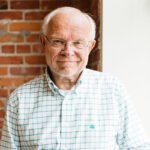
Keith Anderson, D.Min., is a Faculty Associate for Spirituality and Vocation at VantagePoint3 and President Emeritus of Seattle School of Theology and Psychology. He is the author of several books, including his most recent: On Holy Ground: Your Story of Identity, Belonging and Sacred Purpose (Wipf & Stock, 2024). His other works include Reading Your Life’s Story (IVP, 2016), A Spirituality of Listening (IVP, 2016), and Spiritual Mentoring (IVP, 1999). In his writing, teaching, and mentoring, Keith seeks to set a table for people looking to enter the “amazing inner sanctuary of the soul” in the most ordinary and extraordinary moments of life.
[1] Thomas Kelley, A Testament of Devotion, p. 3
[2] Kelley, p. 3
[3] Kelley, p. 6