

What is our part in spiritual formation? “Spiritual formation is…God the Holy Spirit forms Christlikeness in us.”1 If the Spirit does the work in us, what is our part?
Our part is to show up, ready to receive. The practices that follow are not techniques to control God, but ways to notice what God is already doing.
Practices That Help Us Show Up
The title gives a clue; you don’t start from scratch. You might not like the words listed below because they may disrupt your deeply grooved currents of life—but sit with them as you would a loved friend.
Slow down: the pace of spirituality is a slow pace, just as intimacy unfolds slowly. We are subject to three challenges to moving at the pace of godliness:
- Hurry. Dallas Willard told us to “ruthlessly eliminate hurry from our lives.”2
- Our many items on the to-do list, i.e., distractions from seeking first the kingdom of God.
- Unresolved unrest within: it may take the form of bitterness, anger, fear, anxiety, grief, or simply the harshness with which we sometimes relate to others.
- Soul speed moves at the rhythm of breath, holy touch, and relational time—the pace is slower than your morning commute.
Open your ears: Listen. Don’t wrestle with this one, practice it. Few of us are as good at listening as we tell ourselves.
Open your eyes: St. Bonaventura said we have three sets of eyes with which to see:
- The eyes of the body — to see the world around us
- The eyes of the mind — to see what is within us
- The eyes of the heart — to see God and to see one another
Practice gratitude: Live attentive to blessings all around, grace, or hesed love (the long-suffering love of Yahweh), the holy touch of community, the amazement and awe of worship, celebration, and praise. Let your first word in the morning be thanks and your last word at night be “yes.”
Learning to Pay Attention to God’s Presence
Pay attention to the presence of God… in everything. Today, a hawk soared over our field, and I had to pause. Fierce power, to be sure, but exquisite beauty, agility, and graceful motion. This morning, I saw an old acquaintance and offered words of encouragement and grace that he was ready to receive. Tonight, I listened to a podcast that stated gratitude as the other hand of grief.
“With one hand we carry grief, and with the other hand is gratitude. Together, they form the prayer of life.”3
Prayer as Practice, Not Performance
Practice prayer. I think that’s the right word: we practice prayer as a doctor practices medicine. In other words, we keep developing our skill and craft. We have enough to get started, talk to God as a friend. Speak, listen, wait. It’s not complicated. It is, however, both natural to us and not.
We know how to talk to our friends. We know how to listen (even if we’re not skilled at listening). But our friends are with us—in person, on our phone, or on Zoom meetings. God is not physically present. It sometimes feels like I’m just talking to myself; help me not to trust my feelings over my conviction that your words are for all of us today still: “Lo, (that means, dude listen now) I am with you always even to the end of the age.” (Matthew 28:20)
“Open up before God, keep nothing back; he’ll do whatever needs to be done.”4
Sometimes prayer is a simple assurance that you’re already on the right track. Trust that too.
Our part is to show up, ready to receive. Whatever spiritual practices help soften your receptivity, practice those today.
A Mentor’s Practice:
In your next conversation with the person you are mentoring, consider offering one simple invitation for the week ahead:
- Slow your pace long enough to notice one moment of grace each day
- Listen without interrupting during one conversation
- Name one gratitude before sleep
- Sit in prayer for five minutes, speaking to God as a friend
When you meet again, ask:
Where did you notice God’s presence this week?
What helped you show up and be attentive?
__________________________________
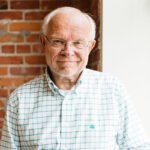
Keith Anderson, D.Min., is a Faculty Associate for Spirituality and Vocation at VantagePoint3 and President Emeritus of Seattle School of Theology and Psychology. He is the author of several books, including his most recent: On Holy Ground: Your Story of Identity, Belonging and Sacred Purpose (Wipf & Stock, 2024). His other works include Reading Your Life’s Story (IVP, 2016), A Spirituality of Listening (IVP, 2016), and Spiritual Mentoring (IVP, 1999). In his writing, teaching, and mentoring, Keith seeks to set a table for people looking to enter the “amazing inner sanctuary of the soul” in the most ordinary and extraordinary moments of life.
1 Eugene Peterson, Regent College course, Soulcraft
2 Dallas Willard, Living in Christ’s Presence: Final Words on Heaven and the Kingdom of God, p. 144.
3 Francis Weller, podcast on YouTube with Anderson Cooper
4 Ps 37:5, The Message