

“We don’t have to understand a crowbar before we put it to use.
Understanding comes with use.”1
—Eugene Peterson
The sentence made me laugh. At no time in my life—as a seminary student, pastor, or professor—did I ever think about a crowbar as a metaphor for any part of the spiritual life. A crowbar, as I used it, was for the only construction skill I possess: demolition. I am not a builder, but I can take things apart. My college roommate and I once worked for ManPower on a Saturday morning, disassembling a bakery oven in a local grocery store. We became covered in flour and crumbs from its years of use. It took us almost all day, but we didn’t use a crowbar.
Some of the men from my church helped me cut our carport in half so we would have space in our tiny backyard for a swing set for the kids. A crowbar was the tool of choice that day. I didn’t think about the science involved.
Just for fun, I asked ChatGPT to describe the mechanics of that for me (and for you). It’s pretty cool:
- When a crowbar is used with a fixed pivot point (fulcrum) placed between the applied force (effort) and the resistance (load), it acts as a first-class lever.
- Example: Prying open a crate by placing one end under the lid and pushing down on the other end. This setup allows a small input force to generate a larger output force.
“Understanding comes with use.”
Eugene Peterson taught us that prayer can be helped by the tools of the Psalms. I don’t pretend to understand the “mechanics” of prayer, but his words are important:
“…the Psalms were not prayed by people searching for the meaning of life. They were prayed for by people who understood that God had everything to do with them.
- God, not their feelings, was the center.
- God, not their souls, was the issue.
- God, not the meaning of life, was critical.
Feelings, souls, and meanings were not excluded—they are very much in evidence—but they are not the reason for the prayers.”2
Prayer has many forms, to be sure—adoration, petition, thanksgiving, intercession, lament, and more.
“Today, the heart of God is an open wound. He aches over our distance and preoccupation. He mourns that we do not draw near to him. He grieves that we have forgotten him. He longs for our presence…. He invites us into the living room of his heart, where we can put on old slippers and share freely. He invites us into the kitchen of his friendship, where chatter and batter mix in good fun. He invites us into the dining room of his strength, where we can feast to our heart’s delight. He invites us into the study of his wisdom, where we can learn and grow and stretch and ask all the questions we want. He invites us into the workshop of his creativity, where we can be co-laborers with him, working together to determine the outcome of events. He invites. He invites us into the bedroom of his rest, where new peace is found…. It is also the place of deepest intimacy, where we know and are known to the fullest…. The key to this home, this heart of God, is prayer.”3
Practice
So maybe, for now, pray in the same way you use a crowbar—a lever for your heart to enter the house of God—without seeking complex definitions, spec sheets, or formulae, just relationship. I wonder what might happen for you in the coming week if you walk from room to room in the very heart of God in prayer.
Mentor’s Practice:
This week, consider inviting the person you mentor to pray with you—perhaps using a psalm as your starting point. You don’t need to explain prayer or teach technique. Simply begin. Like a tool used again and again, prayer shapes understanding over time. Notice together what happens as you enter the presence of God side by side.
___________________________
Starting next week, Keith Anderson and Rob Loane are creating space for leaders to tend the inner life together in A Leader’s Journey in a Fractured World. You can read more and register here.
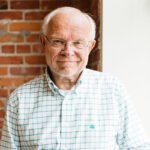
Keith Anderson, D.Min., is a Faculty Associate for Spirituality and Vocation at VantagePoint3 and President Emeritus of Seattle School of Theology and Psychology. He is the author of several books, including his most recent: On Holy Ground: Your Story of Identity, Belonging and Sacred Purpose (Wipf & Stock, 2024). His other works include Reading Your Life’s Story (IVP, 2016), A Spirituality of Listening (IVP, 2016), and Spiritual Mentoring (IVP, 1999). In his writing, teaching, and mentoring, Keith seeks to set a table for people looking to enter the “amazing inner sanctuary of the soul” in the most ordinary and extraordinary moments of life.
1Eugene Peterson, Answering God: The Psalms as Tools for Prayer, p. 7
2Peterson, p. 14.
3Foster, pp 1-2