
Learning the truth of the life we are living and the death that will come to us all.
It seems our family has been surrounded by death in this past couple of years. First, a niece in her 30s, then Wendy’s sister in her 70s, and my brother in his 80s. We have just now gone through 80-plus years of pictures, watches, hats, and stories about my brother most recently. He died on July 7th. It takes me back to the death of our parents, aunts, uncles, and many family members, especially the “older generation.”
In the normal scheme of things, now it is “our” turn to be the older generation. 77 is a great golf score, but it is also a date in time: On June 26th, 1949, at the Little Company of Mary Hospital, a baby boy joined the large extended family of Andersons’, Liljedahls’, and Nelsons’.
Seventy-seven years later, I am writing this blog to you. Most of those family members have died.
There is a particular kind of quiet that comes when the people who knew your beginning are no longer in the room. Their photographs remain. Their stories surface at the kitchen table. A hat, a watch, a familiar saying can carry more weight than it did before. Their lives have become part of the story by which we know ourselves. And now, without warning, we find that we are no longer merely the ones remembering the older generation; we have become it.
The Questions We Rarely Ask
There are questions we rarely ask, even of the older generation. They may be questions we should ask gently, and perhaps answer first for ourselves.
- How often do you think about your own death?
- Now that you are in your late 70s, does the topic of death cross your mind every day or just once in a while?
- Do you ever get obsessed with the inevitability of your death in ways that intrude into the remaining days you might have?
- What images of a future life fill your imagination as you think about death and dying?
- Are you afraid of dying?
I have taken classes that talked about death and dying as a pastoral-care process. We created a curriculum at our church in Michigan to teach parents how to talk to their children about death because one of our own had died at a very young age. So, I can talk about death, even preach about it with conviction and a deeply refined theological foundation.
But is it different now that I find myself closer to 80 than 70? Are there new questions that intrude at this season of life?
We hear of death every day—the war in Iran and Gaza, deaths in city streets, suicides, fires, accidents, and more. Not all are about the death of the older generation. But those of us in that generation are now, in our own turn, asking our questions privately—or occasionally allowing them to be asked when the death of a loved one opens the door.
Here is one thing I know: for most of us, death is something we observe as a third party. We talk about someone else’s death much more easily than we talk about our own.
“It’s sad to hear about the passing of _______________, isn’t it?”
“I wonder how the __________ family is handling the death of _____________?”
We do not typically start a conversation with a sentence like, “I’ve been thinking about death…Let’s talk about it.” Yet perhaps this is precisely the conversation that can make us more awake to the days we still have, more tender toward the people we love, and less alone when the body gives us news we did not want to hear.
Neither Morbid nor in Denial
Is there a middle path between morbidity and complete denial? I think there is. It is not a fascination with death, nor a grim rehearsal of catastrophe. It is the practiced willingness to tell the truth: I am mortal. My body is not an interruption to my spirituality; it is the place where I have loved, prayed, suffered, served, eaten, laughed, and one day will die. To face this truth is not to surrender joy. It may be one way of receiving joy more honestly.
Sometimes it takes an unexpected diagnosis or physical crisis to make that truth suddenly personal.
A friend of mine was in the hospital recently, having just experienced a heart attack. His doctor spoke the words out loud—words he heard for the first time, she said: “You’ve had a heart attack.” He told me that his internal conversation with himself was, “I want a second opinion. I’m not the kind of person who has a heart attack.”
I have watched and read about Tim Keller, pastor of Redeemer Presbyterian Church of New York City. He was diagnosed with stage-four pancreatic cancer in 2020. What did he say about it? For one thing, he was honest enough to admit that he lived in denial about his own death: “I realized at some deep level, I never really did believe I was going to die.” The doctor’s report shattered that illusion.
Keller acknowledged that he wasn’t really so much afraid of death. He also said his cancer deepened his prayer life. There is no easy theology in that sentence. A diagnosis does not make suffering good. But it can expose the illusion that we are self-sufficient, and it can bring us, sometimes for the first time in years, to a prayer that is not polished, strategic, or public. It is simply true.
What happens when we experience a serious or even catastrophic physical event like a heart attack? My friend told me that he felt something like dissociative disorientation (he is a PhD in psychology). He said he felt out of control, frail, and psychologically confused by the news. His daughter told him, “I’ve never seen you so human.” What I think she was saying is, “I can’t quite take in the story of you being less than the caretaker of our family and the strong one for us all.” It seems the vulnerability of a serious medical condition can cause us to lose courage and energy, and to feel a dire sense of impending doom and fear.
He lost his sense of “agency,” his ability to feel in control of his life, and he became disoriented from himself. But that was not all. He also described feeling his identity shift in two different directions: on the one hand, it expanded him and, on the other hand, shut him down. He felt more alert, attentive, and aware, but also resistant to what now seemed more possible than ever in his life.
“Now I am questioning in a more positive way who I am becoming and not only who I had to be before. I’m more interested now in who I am becoming as I move into these next stages.”
And one very important statement:
“It is important for me to say all of this out loud now and not only in my head.”
That may be one of the middle path’s most necessary practices. Death becomes morbid when it is detached from love, community, and hope. Death becomes denial when it is banished from our vocabulary. But when it is spoken aloud with a trusted friend, a spouse, a child, a pastor, or a spiritual mentor, it can become part of an honest life.
Questions for the Story We Are Still Living
Perhaps the question is not simply, “Am I ready to die?” It is also: What story am I still writing with the life that remains? What conversations need to be had while I can still have them? What forgiveness do I need to offer or receive? Whose names, prayers, recipes, stories, and blessings need to be passed on? If I were suddenly unable to speak for myself, would those closest to me know what I hope for, what I fear, what I believe, and how I want to be cared for?
- What do I want the people I love to remember—not merely about what I achieved, but about how I loved, what I valued, and what I believed?
- What unfinished grief have I carried alone, and who might help me name it?
- What practical mercies would spare my family confusion: a will, medical wishes, passwords, a funeral plan, a list of people to call?
- What have I learned about God in the years of my life that I do not want to leave unsaid?
- What would it mean to let my death, whenever it comes, be one final act of love rather than a subject my family must carry alone?
Questions like these inevitably bring us into the territory of grief.
Francis Weller has helped many people see grief not as a personal defect to be managed away, but as a necessary response to what we love and lose. He speaks of an apprenticeship with sorrow: not a life dominated by sorrow, but a life willing to be taught by it. In that spirit, an imagined narrative of our own death is not a rehearsal of disaster.1 It may be an act of attention. It asks us to notice the fragile, beloved life already in our hands.
Henri Nouwen’s life and writing also offer a tender correction to the strong, self-sufficient self. He wrote as one who knew vulnerability, loneliness, friendship, and the hunger to be beloved. He said we must prepare ourselves for death: “ Preparing ourselves for death is the most important task of life, at least when we believe that death is not the total dissolution of our identity, but the way to its fullest revelation. Death, as Jesus speaks about it, is that moment in which total defeat and total victory are won… Jesus speaks about his death as being lifted up. Lifted up on the cross as well as lifted up in the resurrection. Jesus wants our death to be like his, a death in which the world banishes us but God welcomes us home.”2
If we are honest about grief, we cannot make it sentimental. Our stories contain tears, mystery, fear, and laughter. The great and often historic spiritual teachers recognized that the truth about us is often found not in grand declarations but in the places where our lives crack open. Death is one of those places. It can bring us to tears. It can make us angry. It can make us say what we should have said years ago. And it can, strangely, make us more alive to the holiness of an ordinary Tuesday or Saturday.
The best pathway seems to be an embrace of the unhurried, embodied, faithful life of Scripture. A biblically informed imagination resists both triumphal denial and despair. We do not need to make death pretty. We do not need to make it the final authority either. We keep company with the psalms, with Jesus at the tomb of Lazarus, with the church at the graveside, and with the promise that God is making all things new.
Death Is an Enemy—And Not the Final Word
The Apostle Paul had much to say about death. But remember, he wrote all this, of course, before he experienced it. First Corinthians 15:26 says the last enemy to be destroyed is death. He names it directly. Death is an enemy, but…
“He will swallow up death forever” (Isaiah 25:8).
“Death has been swallowed up in victory” (1 Corinthians 15:54).
“Since therefore the children share flesh and blood, he himself shared the same thing, so that through death he might destroy the one who has the power of death, that is, the devil, and free those who all their lives were held in slavery by the fear of death.” (Hebrews 2:14–15)
“This saying is sure: If we have died with him, we will also live with him.” (2 Timothy 2:11)
Because of Paul’s resurrection faith, the cross, and the ascension of Christ in victory over death, something is to be declared and affirmed: death has lost its ultimate power. “For to me, living is Christ and dying is gain” (Philippians 1:21).
We can say theologically that death is the consequence of humankind’s fall into sin. It was an intrusion into the peaceful life of creation. So, we must acknowledge a tension in biblical theology.
- Bodies still decay.
- Death comes to us all.
- Grief is real; it can be raw, painful, and seemingly without end.
All because death is not yet eliminated. But our vision is clear. We can see it on the near shore of resurrection: Revelation 21:3–5.
“And I heard a loud voice from the throne saying, See, the home of God is among mortals. He will dwell with them. They will be his peoples, and God himself will be with them. He will wipe every tear from their eyes. Death will be no more. Mourning and crying and pain will be no more, for the first things have passed away. And the one who was seated on the throne said, See, I’m making all things new. Also, he said, write this. For these words are trustworthy and true.”
Death may bring a reprieve from horrible physical pain and suffering, but Christian theology says,
do not romanticize it. Death may be the beginning of rest and wholeness, but it is no less a loss. We may face it with confident faith and hope; lament is still a painful song we sing.
Do not fear the fear
What is most often terrifying is that we, like Peter, may find ourselves no longer able to care for ourselves. In John 21, Jesus says to him. “Very truly, I tell you, when you were younger, you used to fasten your own belt and to go wherever you wished. But when you grow old, you will stretch out your hands and someone else will fasten the belt around you and take you where you do not wish to go.” Many of us fear dying, the process of it, more than we fear death itself.
In The Chosen, a powerful cinematic moment shows us Eden, Peter’s fictional wife, bereft after the miscarriage of their first child. After grieving alone, she enters the waters of the mikvah, the ceremonial cleansing pool, and grieves her painful loss with women who love her.
She knows that Peter’s own grief has taken hold of him. So, with each step of her descent into the healing waters, she prays, “Don’t let him go. Don’t let him go. Don’t let him go.”
At that very moment, Peter has stepped out of the boat and into the stormy Sea of Galilee. Overcome by his fear of dying, he reaches frantically for Jesus—grasping, clutching, crying out again and again, “Don’t let me go. Don’t let me go. Don’t let me go.”
I suspect that is a fear we all might feel in the moment of our own death: “Don’t let me go.”
We fear that we have not yet finished what we were created to do. We fear that we have left unfinished the business of forgiveness—of those we have harmed or those who have harmed us. We fear that which we have never experienced before, and death is our movement into the great unknown.
Joan Chittister, in her wonderful book, The Gift of Years, wrote, “…underneath it all the questions are not physical at all. They are emotional, psychological, social ones, spiritual ones.
-
- What did I really think my existence was all about, if not about coming to the end of this life and coming to the beginning of another?
- What have I done in the past to come confidently to this moment?
- What can I do now to finally become what I have been meant to be?…
- How much longer will I be able to take care of myself?
- Who will take care of me when I can’t do it anymore?
- And the major one: is my life over now?
- Is there nothing left of the me I have always been?
- Is life now only to be endured rather than lived?
- And of course, which dimension of life have I not lived well up to until this time.
- What can I do about that now, if I am ever to be the person I was meant to be?”3
She says, “A burden of these years is the possibility of giving in to the fear of invisibility, of uselessness, of losing our sense of self in human obligation. Fear tempts us to believe that life is over rather than simply changing.”4
“A blessing of fear in those years is that it invites us to become the fullness of ourselves. It comes to us in the nighttime of the soul to tell us to rise to new selves in fresh and exciting ways–for our sake, of course, but for the sake of the rest of the world as well.”5
And so, it seems, she warns us “not to fear the fear.”6
Death will come to us all
For some, death is simply understood as a natural part of life: death will come to us all. Agreed. It is the most universal reality for all living beings. There is such a thing as a “good death,” one that brings certain kinds of suffering to an end. Some are able to create rituals of passing that actually celebrate the transition that death is.
Frederick Beuchener might tell us to “Celebrate the life by all means, but face up to the death of that life. Weep all the tears you have in you to weep…Something precious and irreplaceable has come to an end and something in you has come to an end with it.”7
Resurrection theology tells us to see death, in Christ, as a door that closes and another that opens. Jesus wept at Lazarus’s tomb; Christians need not pretend death is easy.
And yet Buechner’s Easter conviction is complex:
“The worst isn’t the last thing about the world. It’s the next to the last thing. The last thing is the best. It’s the power from on high that comes down into the world, that wells up from the rock-bottom worst of the world like a hidden spring. Can you believe it? The last, best thing is the laughing deep in the hearts of the saints, sometimes our hearts even. Yes. You are terribly loved and forgiven. Yes. You are healed. All is well.”8
Perhaps it is something like this:
- We do not celebrate that someone has died.
- We celebrate the life they have been given and grieve their absence honestly.
- We entrust them to the God whose love is stronger than death.
At the Portal
I have stood in hospital rooms and ICU units in the final moments of human life.
- Families sometimes hang on to every second, not ready to let their loved one go.
- Families sometimes know the horrors of human pain and encourage loved ones that it is okay to let go.
- Families, especially in the case of an unexpected death from an accident or a sudden illness, are overcome with grief, especially at the loss of a child or a young person.
I attended the funeral of a young boy named Brave. An infant. A day or so before the due date, his mother felt no movement for the first time in months. The catastrophic news undid them: she would have to deliver a baby who would never breathe outside of his mother’s womb, never cry, never open his eyes even for an instant. He had died before he was born.
The father carried him into the funeral, staggering a bit from numbing grief as he carried the tiniest coffin I had ever seen. We listened to the father’s wailing cries of agony.
Death is an enemy, never to be romanticized, sentimentalized, or glorified. It brings loss to those who are left on this side of the portal.
That is why we need one another. We need people who will not rush us toward a lesson, people who can sit near the bed, bring food, remember the name of the one who has died, and let tears be tears. We need the church to speak resurrection not as a slogan that silences grief, but as a promise strong enough to accompany it.
And this: the church, our neighbors, our families, and our world need us as well. Chittister’s words are filled with enough wisdom to help carry us all:
“One thing this period is not about is diminishment, though physical diminishment is surely a natural part of it. It is instead about giving ourselves over to a new kind of development, to the kinds of change that begin in us at the time of conception and continue in us still. The truth is that we are a great deal more than our bodies have always been more than our bodies. But it can take us most of a lifetime to learn that… Our spiritual obligation is to age well—so that others who meet us may have the courage, the spiritual depth to do the same. Abandoning life before life is over is not just resignation; It is not trying to reach for God on God’s terms… We must begin to attend to the inner self now. These years are for allowing the interior life—our continuing questions, our lifelong interests to direct what we do and who we are.”9
“…(the passing of) years are biological; the spirit is eternal.”10
“A blessing of these years is that we know at last what really matters and the world is waiting to hear it. If only we will make the effort and don’t give in to our limitations.”11
Perhaps this is the work before us: to live without pretending that death is unreal; to grieve without giving death the final word; to put our affairs in order without reducing life to paperwork; to speak our love now; to receive the day that is given; and to entrust the ending of our story to the God who entered death himself and promises, “See, I’m making all things new.”12
__________________________________
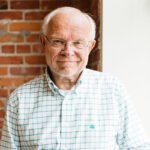
Keith Anderson, D.Min., is a Faculty Associate for Spirituality and Vocation at VantagePoint3 and President Emeritus of Seattle School of Theology and Psychology. He is the author of several books, including his most recent: On Holy Ground: Your Story of Identity, Belonging and Sacred Purpose (Wipf & Stock, 2024). His other works include Reading Your Life’s Story (IVP, 2016), A Spirituality of Listening (IVP, 2016), and Spiritual Mentoring (IVP, 1999). In his writing, teaching, and mentoring, Keith seeks to set a table for people looking to enter the “amazing inner sanctuary of the soul” in the most ordinary and extraordinary moments of life.
1 Francis Weller, The Wild Edge of Sorrow, p. xii.
2 Henri J.M. Nouwen, Here and Now: Living in the Spirit, pp. 139-140.
3 Joan Chittister, The Gift of Years, p. 16
4 Chittister, p. 19
5 Chittister, p. 19
6 Chittister, pp. 17, 302
7 Frederick Beuchener, Listening to Your Life,
8 Frederick Beuchener, The Final Beast, pp. 174-175.
9 Joan Chittister, The Gift of Years, pp. 16, 17, 18
10 Chittister, p. 133.
11 Chittister, p. 141
12 Revelation 21:5